Discover the joy and importance of reading skills practice in kindergarten with fun and engaging practices that lay the foundation for lifelong learning. Explore our expert tips and creative strategies to spark the love of reading in your little ones.

This post may contain affiliate links. Should a purchase be made, Love Beauty Thrive may receive a small commission at no added cost to you. Affiliate disclosure is available here. Thank you.
Reading Skills Practice in Kindergarten
Kindergarteners (ages 4-6) are in the early stages of learning to read.
But with limited attention spans, you’ll need some exciting strategies and tips to keep them interested, focused, and engaged when working on reading skills practice in kindergarten.
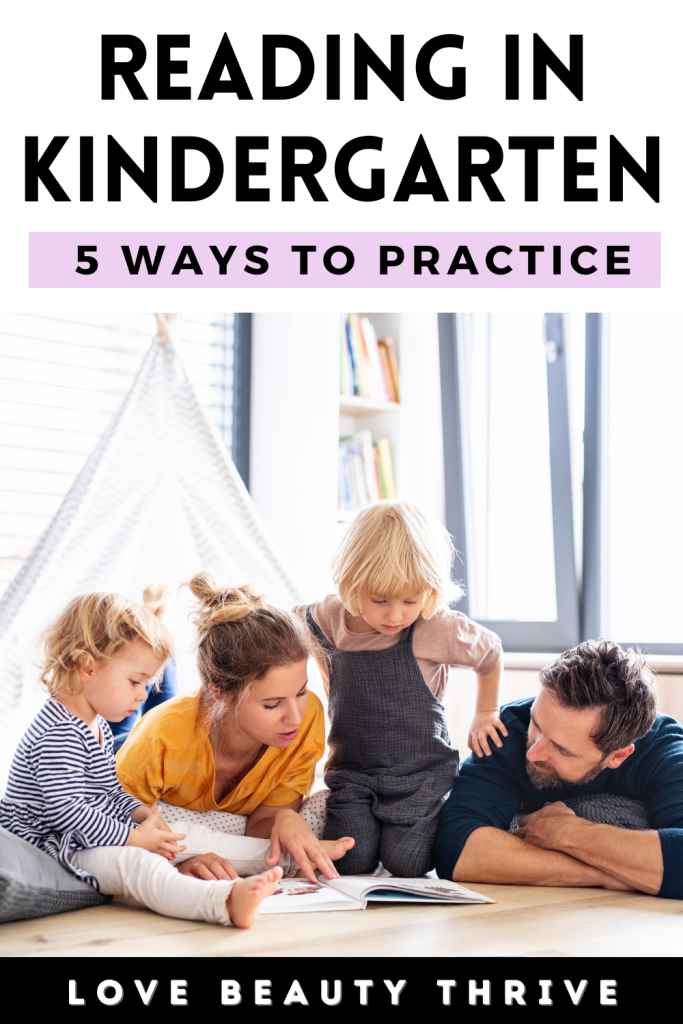
Many reading strategies for young children can be surprisingly simple and easy to implement, starting your kindergartener off on the right track to academic success and enjoyment.
We’ve put together a list of 5 smart ways to help kindergarteners practice strong reading skills that are easy and fun for parents, caregivers and families to enjoy together with their children.

They are sure to help instill in your child a lifelong passion for books and reading . . .
Let Them Choose
Kids will read more if you let them pick out their own books or other appropriate reading material (e.g., magazines, comics, etc.). Ask them to read their selections to you regularly, to assess the development and progression of their reading skills practice in kindergarten.
Create A Routine
Read together with your child (take turns reading out loud). Encourage them to also read independently every day. This is especially important in the summer months when your child is out of school (read during the day and at bedtime).

It’s the best way to support their reading skills practice in kindergarten while on summer break.
Keep It Quick
Reading should always be a positive experience. Keep sessions quick, interesting, and fun (take a break if your child is tired or gets frustrated).
Finger Tracking
Ask your child to use their finger to track words as they are reading. This helps with visual/directional processing, decoding, fluency, and word recognition when learning to read. Many teachers encourage finger tracking with respect to reading skills practice in kindergarten years (and even beyond).
Important Concepts
Kindergarten is an exciting time of new experiences and relationships. Age appropriate stories about friendships, feelings, diversity, kindness, and other important social and emotional concepts are recommended.
Reading Skills Practice in Kindergarten
Nurturing reading skills practice in kindergarten is both rewarding and foundational to fostering a lifelong love of learning. By practicing these strategies and activities, we can open a world of imagination, understanding, and curiosity for our children and young readers. Let’s commit to making reading an adventure filled with joy and discovery, ensuring that even our littlest develop a confident and a deep-seated love for books and reading.

Together, parents and families can lay the groundwork for a future where every child is empowered to achieve their full potential through the magic of literacy.
Kindergarten Reading Skills Practice: Need More?
Have a newborn (birth to 6 months)? Here are 6 loving tips on reading to newborns and why it’s never too early.
Have an infant or toddler (6 to 24 months)? Here are 3 important guidelines on introducing reading skills to infants and toddlers.
Have a preschooler (ages 2-4)? Here are 6 brilliant tips to foster a love of reading in preschoolers.
Follow on Pinterest
We love connecting with you, and we love Pinterest. You can follow Love Beauty Thrive on Pinterest here. Save this post for later using this pin. As always, thanks so much for reading, and for all the love!
You May Also Like
6 Loving Tips On Reading To Newborns & Why It’s Never Too Early
3 Important Guidelines on Introducing Reading Skills to Infants and Toddlers
6 Brilliant Tips To Foster A Love Of Reading In Preschoolers